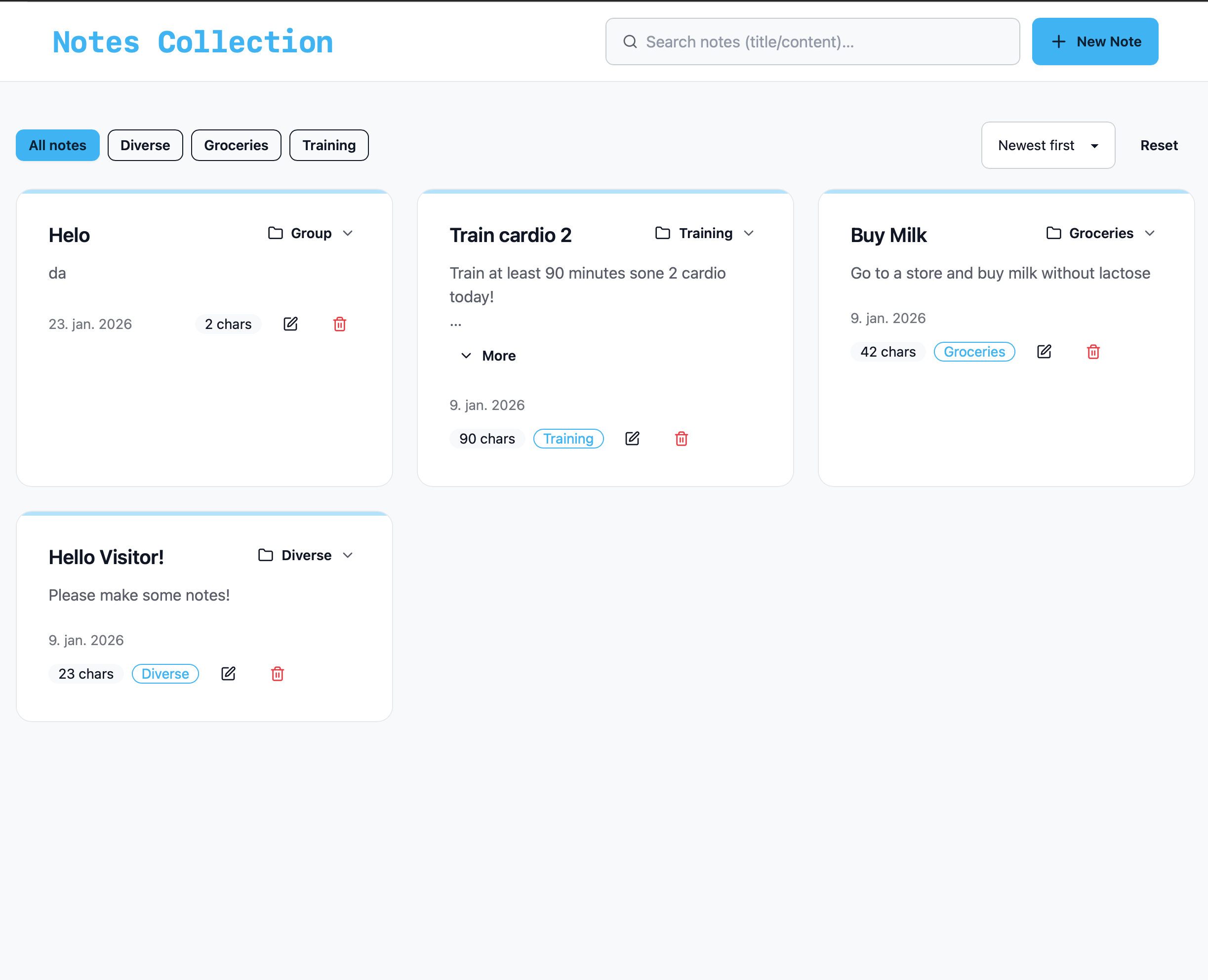
MERN Notes App
Full-stack MERN notes application with clean REST API design, rate limiting, security hardening, and a modern responsive UI: deployed on Render.
A production-ready full-stack notes application built to demonstrate real-world backend engineering and REST API best practices, not just “make it work,” but make it work correctly.
What makes this different from a tutorial project
The focus was on getting the HTTP semantics right: correct status codes, predictable endpoint structure, proper error handling, input validation, and rate limiting that actually protects the API. These are details that get skipped in most beginner tutorials.
Features
Backend (Node.js + Express)
- RESTful API with resource-oriented design (
/api/notes,/api/notes/:id) - Full CRUD: GET, POST, PUT, DELETE with proper HTTP verb semantics
- HTTP status codes: 200, 201, 400, 404, 429, 500 used correctly (not just
200for everything) - Rate limiting via
express-rate-limit: IP-based throttle, HTTP 429 on abuse - Input validation and structured error responses
- MongoDB + Mongoose: flexible schema, Mongoose validation
Frontend (React)
- Component-based architecture with clear separation of concerns
- Service layer for API calls (not raw fetch scattered through components)
- Responsive, mobile-first design
- User-friendly CRUD: create, view, edit, delete notes with optimistic UI
API Design
| Method | Endpoint | Status codes |
|---|---|---|
| GET | /api/notes | 200 |
| GET | /api/notes/:id | 200, 404 |
| POST | /api/notes | 201, 400 |
| PUT | /api/notes/:id | 200, 400, 404 |
| DELETE | /api/notes/:id | 200, 404 |
Deployment
- Deployed on Render (backend) and Render (frontend static)
- MongoDB Atlas for database hosting
- Environment-based configuration: no secrets in code
What this demonstrates
Understanding that a working API and a good API are different things. Rate limiting, proper HTTP semantics, structured error responses, and environment-based config are not optional in production, and this project treats them as required.